Short answer
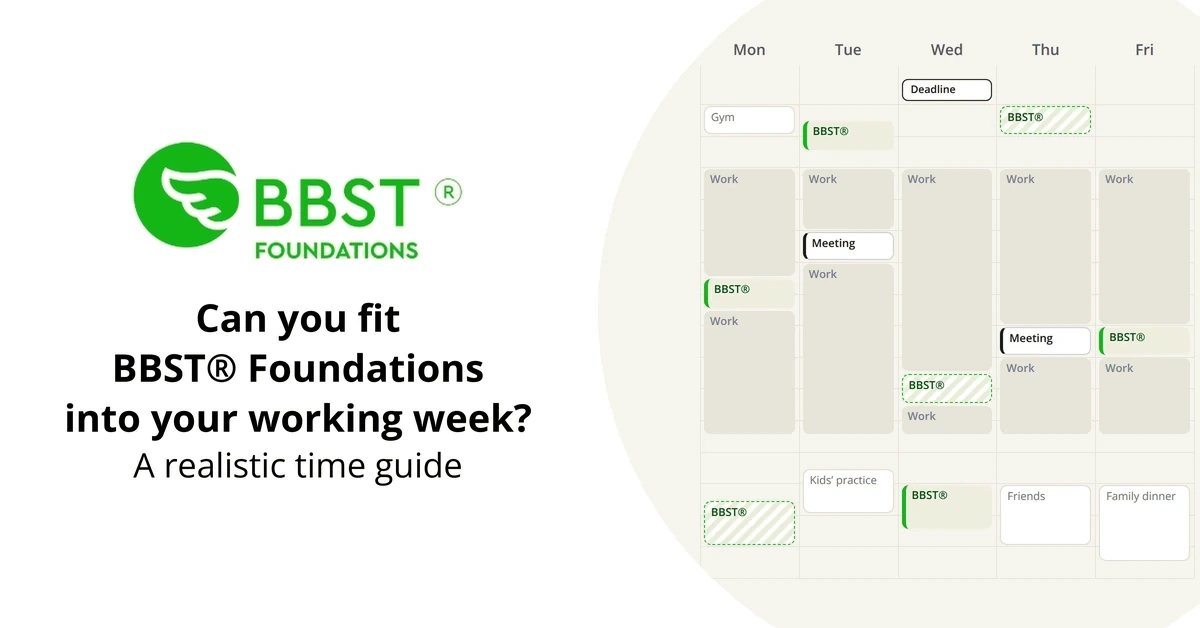
BBST® (Black Box Software Testing) Foundations runs online for four weeks, with no fixed class times and two deadlines a week. In our 2025–2026 course feedback surveys, 88% of participants spent 10 or more hours a week on it, and we recommend planning for 15–20 hours a week: three weeks of lessons, then one week for the final exam.
I’ve gathered most of the questions managers and potential participants ask us about time and scheduling in the BBST® Foundations course. My intent is to put all the answers in one place, so you get a clear picture. The other BBST® courses follow a similar format, with some differences.
How much time does BBST® Foundations really take each week?
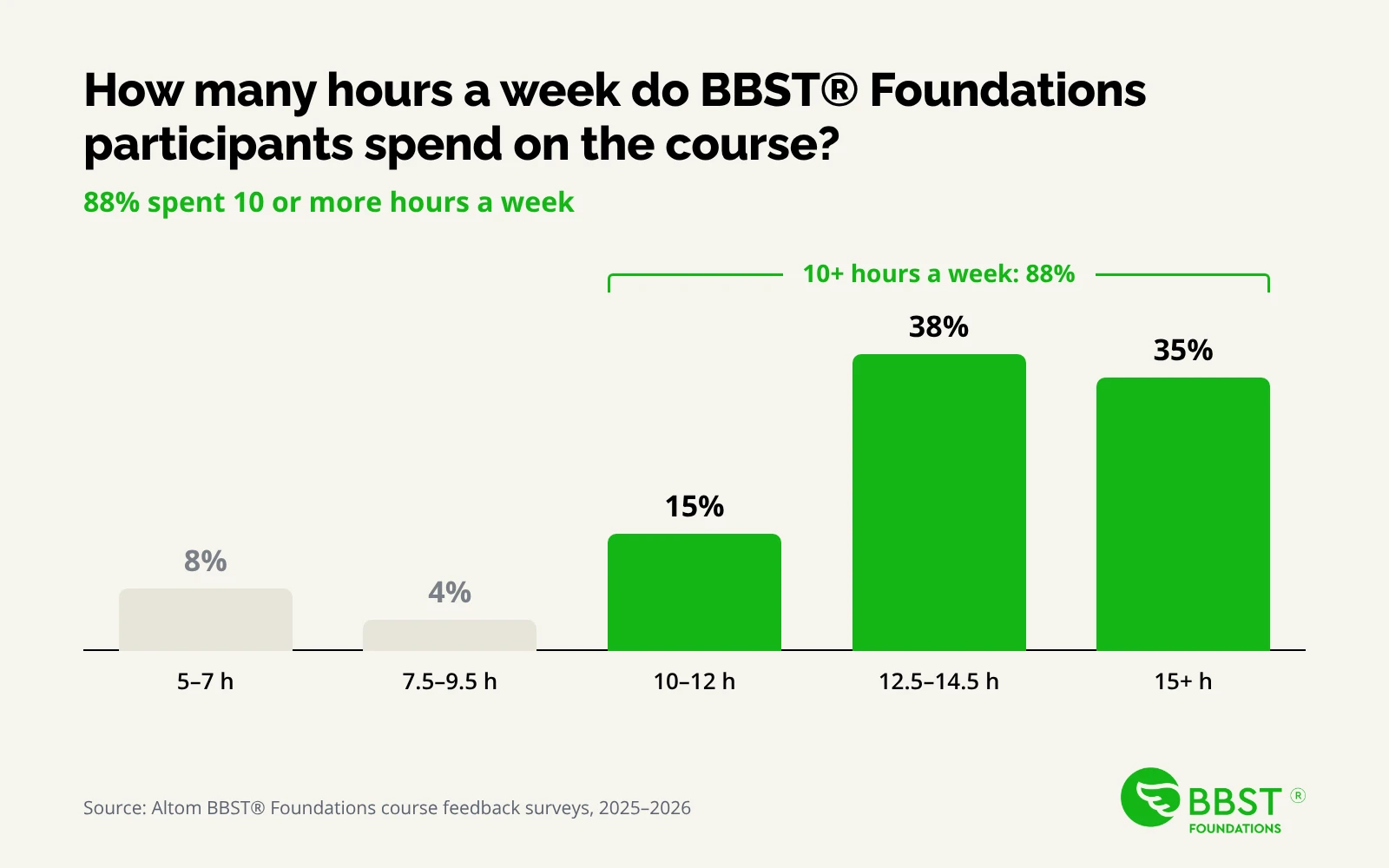
Plan for around 15–20 hours per week. In our 2025–2026 feedback surveys, 88% of participants spent 10 or more hours a week on the course, and 35% spent 15 or more.
Here is the breakdown from our past BBST® Foundations students (Altom course feedback surveys, 2025–2026):
- 8% spent 5–7 hours/week
- 4% spent 7.5–9.5 hours/week
- 15% spent 10–12 hours/week
- 38% spent 12.5–14.5 hours/week
- 35% spent 15 or more hours/week
The actual time you’ll spend on the course depends on:
- your familiarity with online learning
- how comfortable you are writing argued, open-ended answers
- how deep you choose to go into the materials, discussions, and peer reviews
Every BBST® course is built in layers, so it’s equally valuable whether you’re new to testing or have many years of experience. Beginners spend their time building a solid foundation: new concepts, vocabulary, and ways of thinking. Experienced testers spend theirs questioning what they already do: they compare the material with their own practice, spot their blind spots, and go deeper into the topics that challenge them.
Breakdown of weekly activities
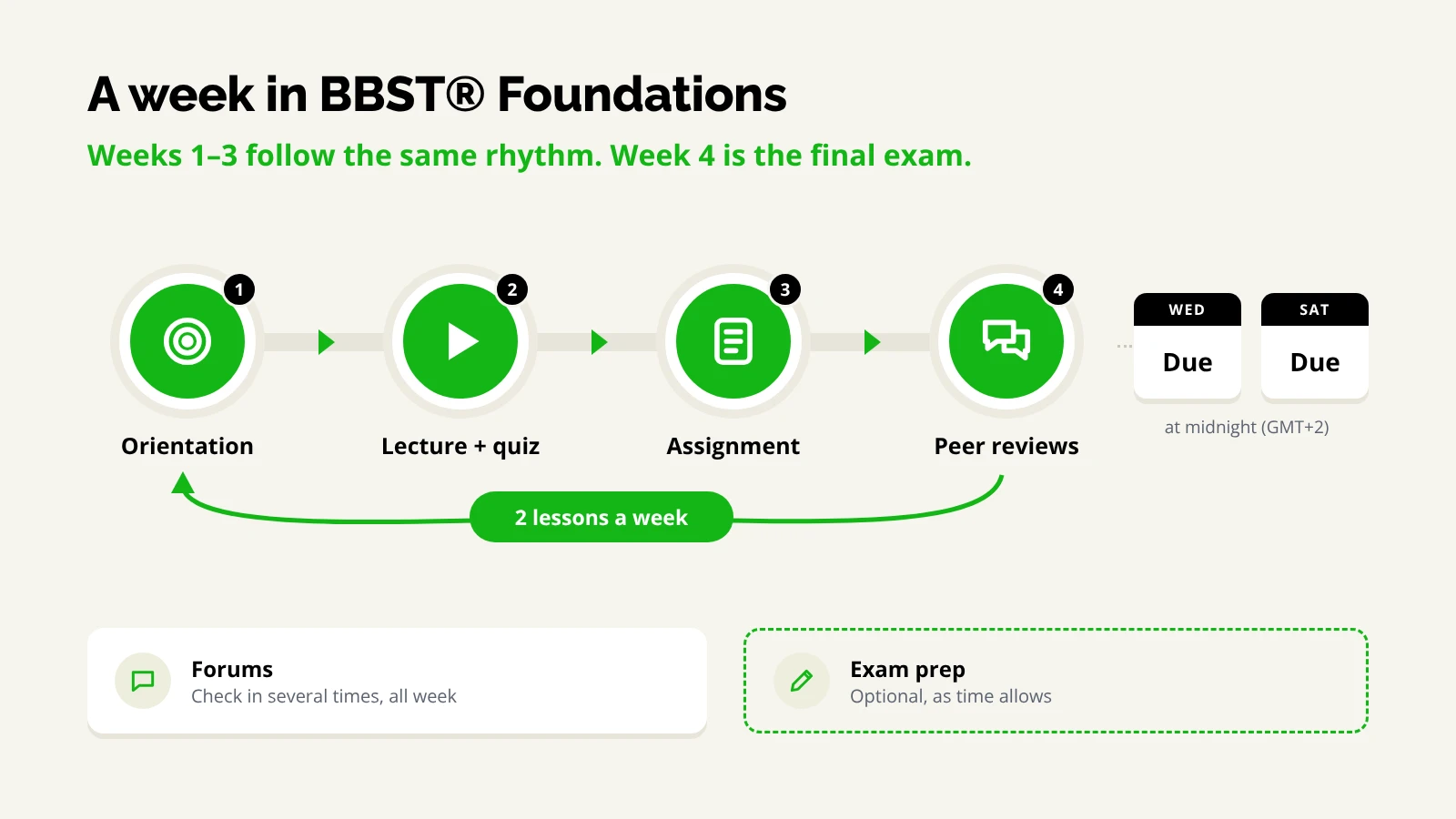
Here is what each activity involves in weeks 1–3. Week 4 is for the final exam (see “How is time structured for the final exam week?”).
| Activity | What it involves |
|---|---|
| Orientation assignment | A short warm-up to grasp the scope of the testing problem covered in the lecture |
| Lecture and quiz | A video lecture (18–30 min) and readings, then a multiple-choice quiz (about 6–16 questions) |
| Assignment | You write and submit your answer, then get feedback |
| Peer reviews | You review assignments written by your classmates |
| Forums | Check in several times a week to ask questions, answer requests and follow the discussions |
| Exam prep (optional) | Draft your answers to the exam questions and discuss them with peers in the Exam Prep forum |
If you want to understand more about the course structure and the activities, watch the BBST® Foundations demo made by Oana Casapu, a BBST® instructor, managing partner at Altom, and a professional software tester for many years.
How much time you’ll spend on each activity depends a lot on your learning style and what you choose to focus on/what helps you best. Successfully completing a BBST® course depends on all your activity, not just the final exam.
What does the weekly cadence and submission schedule look like?
During the first 3 weeks of BBST® Foundations, you have two strict assignment deadlines each week: Wednesdays and Saturdays at midnight (GMT+2). Every lesson includes a weekend day, which helps if your work schedule leaves little room for the course during the week.
The last week of the course is dedicated to the final exam, which you’ll need to submit by Saturday at midnight (GMT+2).
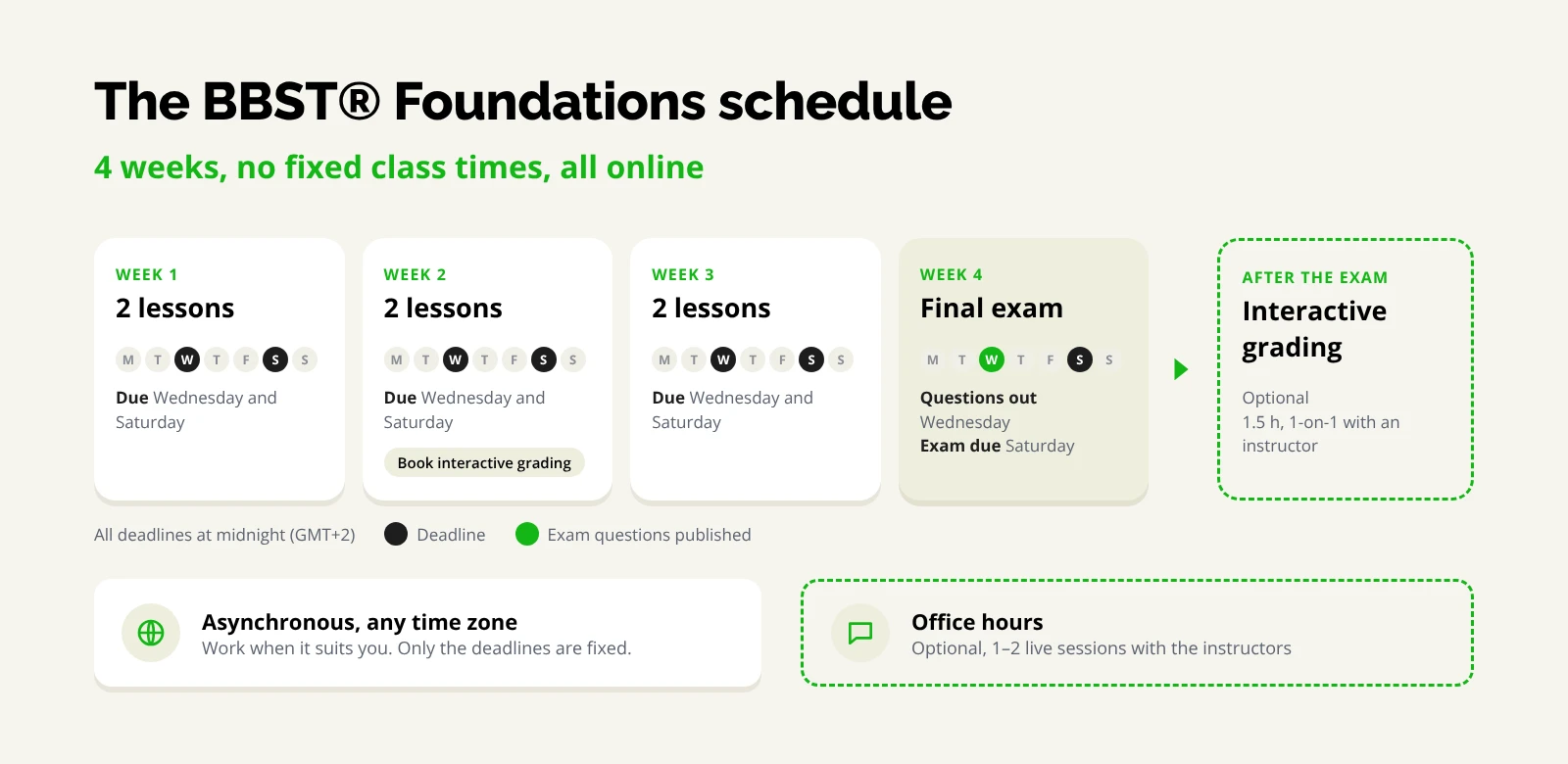
Everything happens asynchronously on our online platform, so you plan your coursework around your job, not the other way around.
There are only two optional activities that require you to be available at specific times (if you choose to attend them):
- Online sessions with the instructors: we organize one or two “office hours” during the course, where you can ask the instructors questions or discuss course topics directly.
- Interactive grading: a 1.5-hour, 1-on-1 meeting after the exam week, where you and an instructor go through your exam answers together: you explain your reasoning and get feedback on the spot. You can book your slot from week 2.
You can join from any time zone. Just keep track of the deadlines. For questions about deadlines, payment or the course language, see our BBST® FAQ.
How is time structured for the final exam week?
Week 4 is dedicated to the final exam, and that’s your only concern that week: no lectures, quizzes, or assignments. Exam time varies a lot from person to person, so set aside as much time as you can.
The BBST® Foundations exam consists of 6 essay-style questions. At the beginning of the course, the instructors publish a set of practice questions, and the 6 exam questions are chosen from that set.
We publish the 6 exam questions on Wednesday of week 4 at midnight (GMT+2), and you have until Saturday at midnight (GMT+2) to submit your answers. Until then, you can keep practicing with the full set.
What happens after the exam?
Once you submit your exam, you join the interactive grading session if you booked one.
After that, your instructor lets you know whether you completed the course successfully. The decision is based on your exam and on your activity throughout the course: quizzes, assignments, and peer reviews.
If you did, you’ll also receive your certificate of completion.
How do you balance a BBST® course with a full-time job?
Most of it comes down to planning and a steady rhythm: study a little every day, focus on what helps you learn most, and start preparing for the exam early.
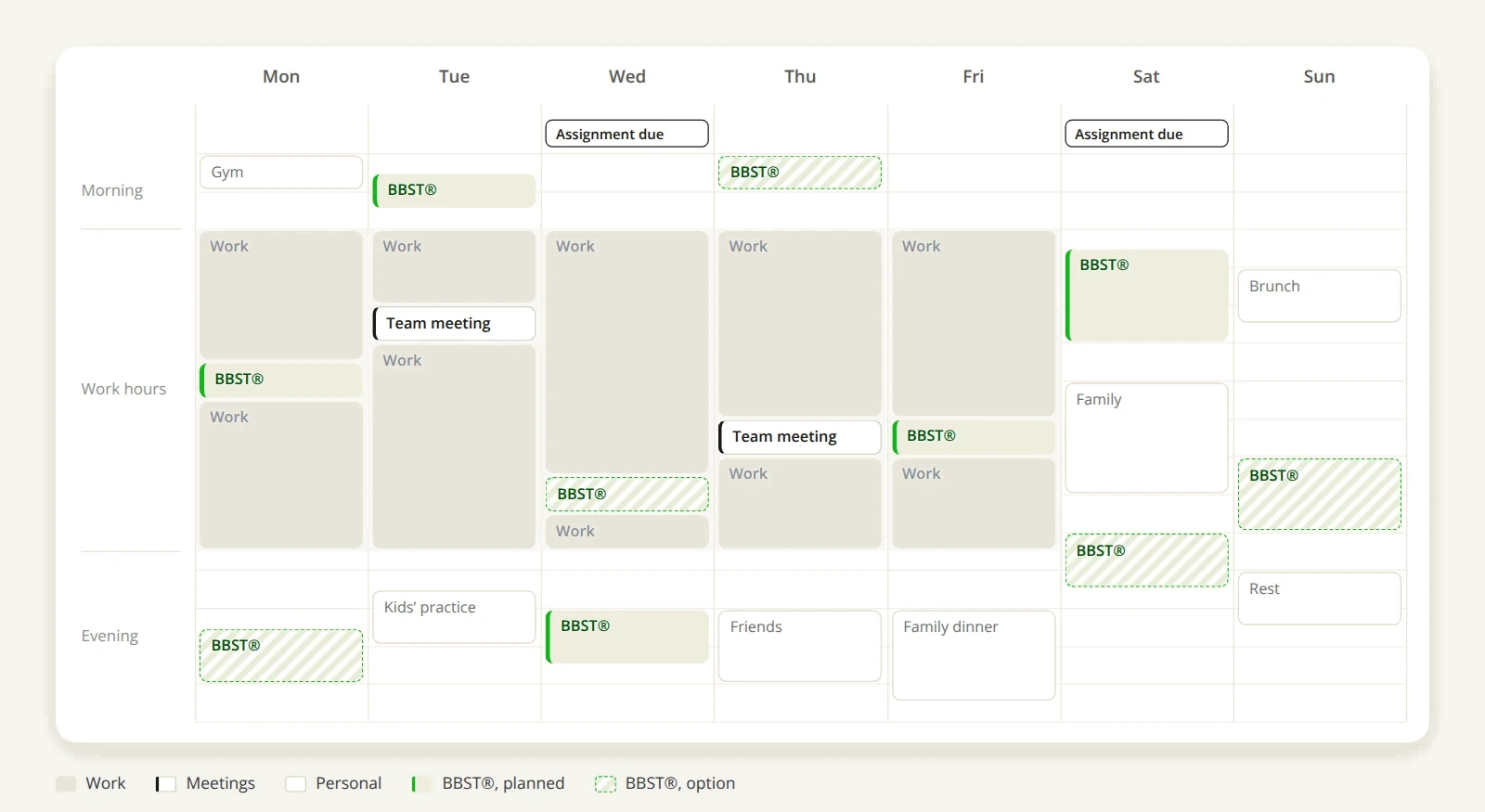
Before you start, clarify how much of the course time will come from your working hours and how much from your own time. In past classes, some participants had dedicated office hours through an employer training program, others studied entirely in their own time, and many did a mix of both. Whatever your situation, here are a few tips from our instructors and graduates.
- Spend 2–3 hours a day on the course instead of leaving it all for the weekend. Discussions move quickly, and if you let things pile up, you may get overwhelmed. Posting early also gives your classmates time to review your work, so you get more feedback and insights.
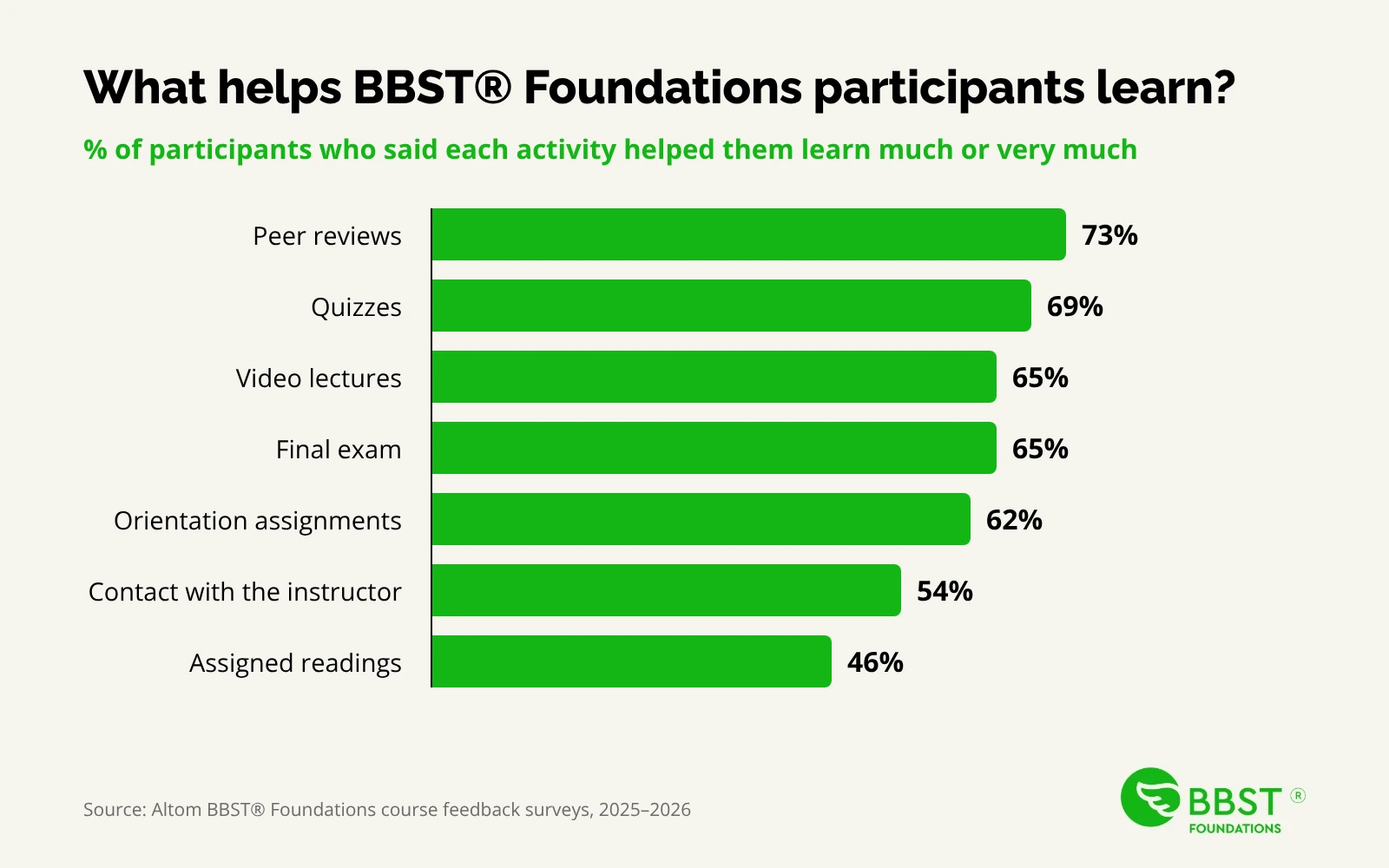
- Figure out early on what helps you most. Which course materials help you learn best? It might be the quizzes, the video lectures, the assignments, or something else; then spend more time on that. In our 2025–2026 BBST® Foundations surveys, peer reviews came out on top (73% said they helped their learning much or very much), followed by quizzes (69%), video lectures and the exam (65% each), the orientation assignments (62%), contact with the instructor (54%), and the assigned readings (46%).

- Prioritize and keep your focus. There’s a lot of content in the course, and it may be tempting to aim for a very thorough analysis every time. Pay attention to any time recommendations in the assignments, and use your instructors’ feedback and guidance to stay focused while keeping pace with the class. If you don’t get through all the recommended readings, you’ll still have access to the platform after the course, so you can come back and keep learning.
- Start exam prep early. The practice questions are available from the first week. When a lesson covers a topic from one of them, draft your answer while the material is still fresh. You’ll have more time to discuss it with peers and instructors, and exam week will feel much lighter. Melinda Oprean took BBST® Foundations alongside a full-time job, and starting exam prep sooner is what she says she’d change next time. See her article “4 things I wish I knew before starting BBST® Foundations”.
- Use Gen AI only where the rules allow it. Unless an assignment asks you to, don’t use AI to generate ideas, structure your answers, or analyze the scenarios. The assignments are meant to be a bit uncomfortable: getting stuck and working your way out is where the learning happens. If an AI tool does that part for you, you get a polished answer but skip the exercise. It’s like sending someone else to the gym on your behalf. It also costs you feedback: instructors respond to your thinking, so a draft that isn’t really yours leaves little to work with. A rough answer that’s your own teaches you more than a perfect one that isn’t. And remember: the exam is AI-free. The How to Use Generative AI Responsibly in BBST® Courses guide, which you’ll find on the course platform, explains exactly what’s allowed, so read it carefully.
Is taking a BBST® course worth the time investment compared to self-study?
If your goal is to build skills, yes. The free materials teach you the concepts, but the paid course adds the practice and feedback that turn them into skills.
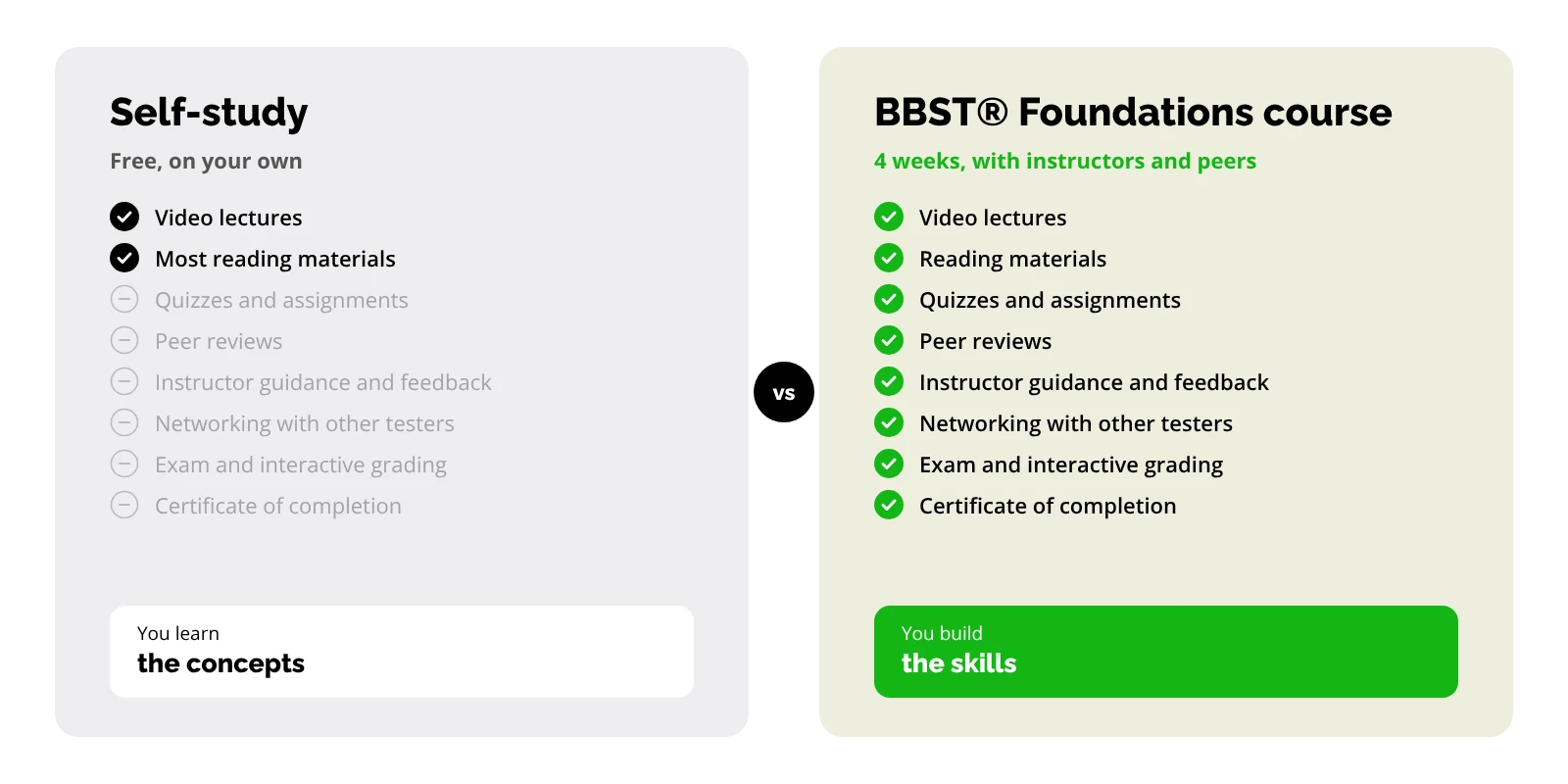
All the BBST® video lectures and most of the reading materials are available online for free. You can find them on our website and study them on your own. What’s missing are the activities that turn knowledge into skill. Watching lectures and reading help you understand the concepts, but skills come from applying them, getting valuable feedback, and applying them again. Building skills takes time and practice, and that’s what the paid course provides: the learning context where that happens: structure, deadlines, feedback, and peers. By taking the paid course, you get:
- Access to quizzes and assignments that make you re-evaluate, understand in depth, and apply the course material.
- Peer reviews: you reflect further on the material and your answers and practice giving feedback.
- Instructors’ guidance and feedback: you work with professional testers who have solid experience in software testing roles. You can (and we strongly encourage you to) ask them questions and get guidance on anything related to the course. You also get personalized feedback on all assignments, and the instructors follow your progress and check whether you’re applying that feedback from one assignment to the next.
- 100% human feedback: every piece of feedback you get from instructors is written by a person, not generated by AI.
- Networking: you get to discuss not only course topics but also real-life scenarios and challenges other professionals are facing. We also offer a forum where alumni can keep sharing their experiences and what they’ve learned.
- Exam and interactive grading: a final check of what stuck with you, plus an optional 1-on-1 review with your instructor.
- Certificate of completion: at the end, you’ll receive a certificate of completion that shows your current or future employer you didn’t just study testing; you practiced it for four weeks, with feedback from experienced testers at every step.
So, should I make time for BBST® Foundations?
BBST® is about building testing skills, not memorizing a syllabus. You practice the thinking real testing demands, and you can apply it at work right away, whatever your role or experience.
BBST® takes real time and work, and it pays you back in real skills. If that’s what you’re looking for, the answer is yes: don’t keep postponing it.
If you are not sure, then try to answer the following three questions.
First, what are you looking for?
- If you want to think more sharply about what and how you test, find bugs that matter, and stay relevant as AI changes how testing is done, BBST® is built for that.
- If your goal is a fast, low-effort course to add another line to your CV, there are better-suited options out there.
Second, check whether our approach to software testing matches yours. To find out:
- Look at the course pages and even the free materials from our Resource Center.
- Read some of the articles in our “Learning from Peers” series.
Third, see how BBST® fits into your schedule by checking the course calendar and start the course when it suits you best. We have rolling admissions, so you can start a course any Sunday.
If you have any other questions, write to us at contact@bbst.courses.
Sources and further reading
Course information
Articles
- A Comprehensive Guide to the Black Box Software Testing (BBST®) Foundations Course
- 8 Reasons Why BBST® is Not Another Certification Course
- Melinda Oprean: “4 things I wish I knew before starting BBST® Foundations”
- Learning from Peers articles
- How do students participate in the BBST® courses
- How should students provide feedback in the BBST® courses
- How do students pass the BBST® courses
Free materials
About the Author: Ancuța Bodnărescu

Subscribe to the BBST® Resource Center
One newsletter per month with relevant content.